Central Africa marketing2 décembre 2025
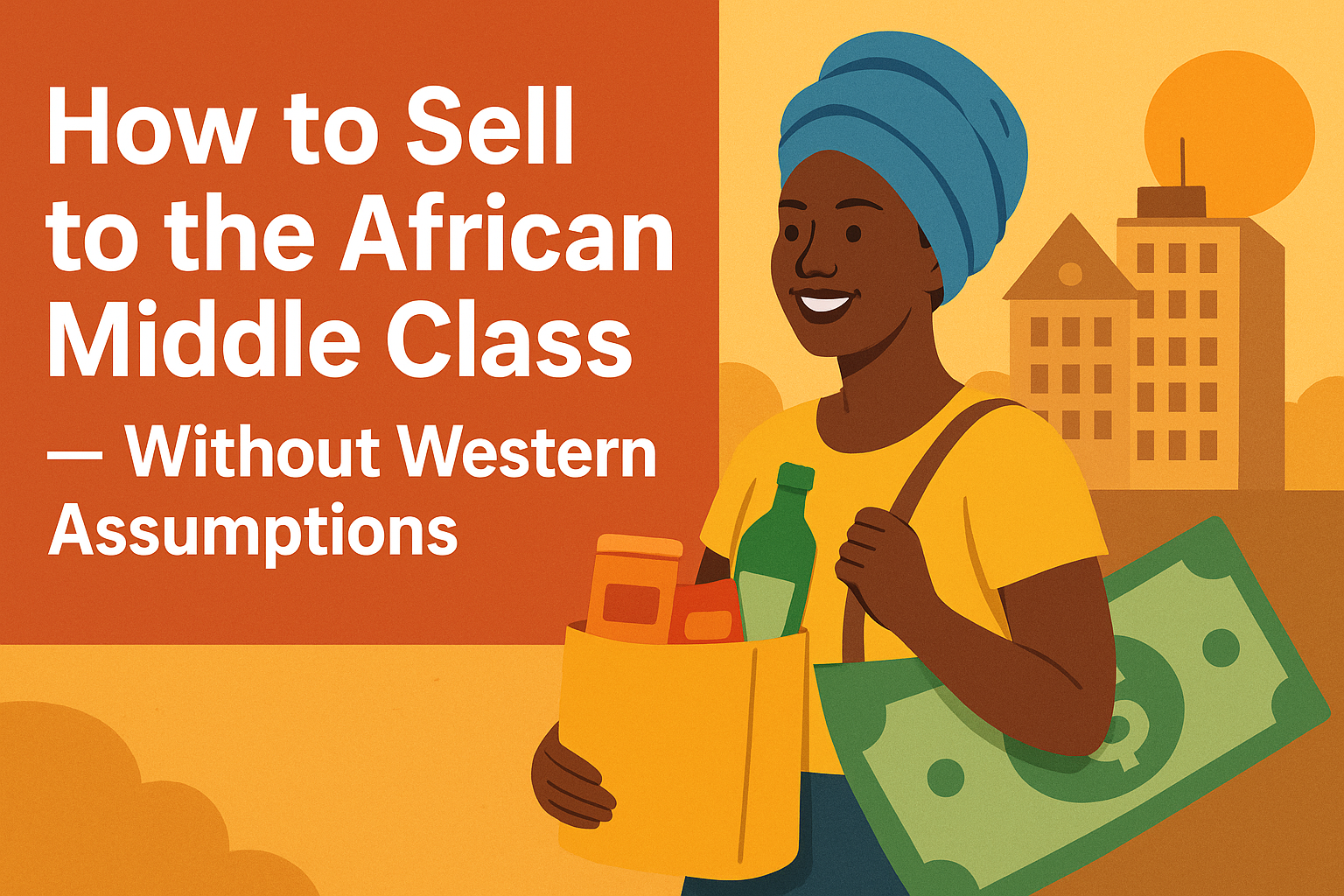
How to Sell to Central African Middle-Class Consumers: A Complete Guide
fnmalic
Auteur
8 min de lecture

fnmalic
Auteur
Central Africa's middle class is growing—and with it, opportunities for businesses that understand how to reach these consumers effectively. But here's the challenge: marketing strategies that work in Western markets often fail spectacularly in Cameroon, DRC, Gabon, and across the CEMAC region.
Why? Because Central African consumers have distinct preferences, buying behaviors, and trust mechanisms that demand localized approaches.
If you're looking to sell products or services to this market—whether you're in FMCG, finance, tech, or retail—this guide breaks down everything you need to know.
Central Africa isn't a monolithic market. With 54 countries, over 2,000 languages, and vastly different cultural contexts across the continent, a one-size-fits-all approach simply doesn't work.
The data is clear: 62% of African consumers prefer products made in their own country, and 63% prefer African brands overall. When foreign brands enter the market without adapting, they're immediately at a disadvantage.
Successful localization means:
When brands appear on familiar channels—local radio voices, community billboards, trusted merchant networks—consumers perceive them as credible and stable. Foreign labels that ignore this principle struggle to gain traction.
Central African middle-class consumers are pragmatic. They want value, not necessarily the cheapest option.
Recent surveys show 24% of African consumers have switched to cheaper brands under economic pressure, but this doesn't mean they'll sacrifice quality. They're looking for the "good enough" trade-off—products that deliver solid quality at an affordable price point.
This explains why many successful brands offer:
A Cameroonian FMCG executive notes that launching products in low-cost, smaller packages dramatically increases trial rates among price-conscious shoppers.
Unlike Western markets where individual research dominates, Central African consumers rely heavily on their extended networks. Family, friends, church members, and community groups are primary sources of product information.
The numbers: 41% of consumers cite personal recommendations as the most influential factor in purchase decisions—second only to radio advertising.
In practice, this means:
In rural Cameroon, mobile sales vans visit village markets and make announcements. As one farmer explained: "Company promotion vans often visit our village... if the product and price is right, I go and buy it." This trusted, in-person outreach works where traditional advertising can't reach.
Over 70% of African middle-class shoppers read product labels carefully, and 52% cite quality packaging as a top purchase driver.
Consumers expect brands to deliver on their promises. Research in Cameroon found that loyalty to local beverages was strongly linked to satisfaction with both product quality and branding. When brands fail to meet expectations, consumers switch quickly—and they punish inauthentic companies faster than their global counterparts.
Six key expectations emerge consistently:
Global brands that succeed in Central Africa adapt their formulations. Nestlé's Maggi bouillon cubes are a prime example—they offer flavors like "Maggi Nokoss" and "Maggi Mix'Py Ginger and Garlic," using locally appreciated ingredients such as cassava and fermented soy to match traditional recipes.
Fortifying products for local nutritional needs (adding iron, iodized salt) is another effective strategy that shows commitment to consumer wellbeing.
As the middle class becomes more affluent, health consciousness grows. Cameroonian consumers increasingly value wellness, prompting companies to balance quality with affordability in health-oriented products.
Financial services face unique challenges in Central Africa, where many consumers lack formal banking experience. Yet this sector has seen explosive digital growth.
Mobile payment platforms have transformed how Central Africans access financial services:
Why it worked: Pandemic-era policies encouraged contactless payments, operators cut fees, and the service aligned with consumers' daily needs—airtime purchases, utility payments, person-to-person transfers.
For financial products, trust is everything. MTN's Fintech CEO emphasizes that "building trust starts with security and partnerships"—meaning clear regulatory compliance and consumer safeguards.
Effective financial marketing strategies include:
Orange Money's success came from aggressive outreach—billboards, radio ads, and agent networks—all emphasizing ease of use and flexibility. The brand made sure its services (bill pay, transfers, merchant payments) solved real daily problems.
Some banks are deploying banking agents—shopkeepers who act as mini-branches—alongside SMS services for account holders. These should be pitched as partnerships with familiar neighborhood merchants.
Financing products (loans, insurance) sell better when bundled with community events or savings groups, tapping into existing trust networks rather than trying to replace them.
Fast-moving consumer goods face a unique distribution challenge: about 98% of FMCG sales in Cameroon occur through informal markets and small shops, not supermarkets.
Beyond flavor adaptation, packaging must match purchasing habits:
Promotions and discounts heavily influence buying behavior. Cameroonian shoppers will switch brands for items on sale, making limited-time deals effective for spiking sales.
With formal retail still limited, brands work through:
For trust-building, brands employ local celebrities, religious leaders, or "market queens" to endorse products. Community fairs and cooking demonstrations at church gatherings or village markets allow people to sample products with guidance from familiar faces.
Radio is the single most influential advertising medium in Africa, cited by 51% of respondents. Local radio spots in French, English, or dialects reach vast audiences, especially in rural and semi-urban areas.
Effective FMCG campaigns blend:
When consumers see and hear a brand across multiple touchpoints—radio, billboards, WhatsApp—they subconsciously trust it more. This "mixed media" effect creates perceived stability and credibility.
Central African consumers increasingly operate in both worlds, but the balance differs by location and demographic.
In Cameroon:
Urban, younger consumers engage actively on Facebook, WhatsApp, TikTok, and Instagram—often on basic smartphones. Businesses can target these audiences with local-language content and interactive promotions.
Most transactions still happen face-to-face with cash payments. The informal market sector—street vendors, small shops, market stalls—accounts for the vast majority of everyday purchases.
Successful sales strategies must exploit these channels:
The most effective approach is omnichannel: reinforcing messages across digital and offline touchpoints.
Practical tactics:
Mobile Money as a Sales Channel: Merchants display QR codes or short codes on packaging, allowing customers to pay via mobile apps at market stalls. Loyalty programs and payment discounts via mobile wallets tap into digital habits.
Informal Market Partnerships: Train local shopkeepers to upsell products. Offer trade finance to big informal retailers to encourage larger stock orders.
Community and Trust Events: Pop-up events or sponsorships of local festivals connect with consumers offline. For example, a mobile network sponsors a music concert and distributes branded items, building perception while entertaining. Banks sponsor financial literacy workshops at churches or trade schools.
Seasonal Messaging: Tailor campaigns to local usage patterns—promote fabric softeners around holidays, sachet cold drinks in the dry season.
A beverage company might launch a radio jingle alongside a social media contest with QR codes linking to a mobile site. Even if only 40-50% of people are online, they still encounter consistent messaging across radio, print, mobile ads, and point-of-sale promotions.
By building a vast agent network of local merchants and working with regulators to ensure security, Orange Money achieved 11 million users. The service's flexibility—transfers, bill payment, merchant acceptance, government payments—encouraged rapid adoption. National surveys confirm mobile money users jumped to 42.7% of adults by 2022.
Key strategy: Radio spots, SIM toolkit menus, and Orange Money logos at merchants created familiarity and trust.
MTN's MoMo platform now dominates in Cameroon, claiming the largest active user base in the country. MTN combined digital innovation with offline trust by working closely with regulators to fight fraud—vital for building consumer confidence.
By tailoring flavors to Central African palates (echoing local condiments) and fortifying cubes with micronutrients, Nestlé positioned Maggi as both familiar and valuable. Marketing emphasizes recipes and nutrition, aligning with cultural values around family meals. This localization made Maggi a kitchen staple.
This Cameroonian company's Top and Djino juices, plus Castel and 33 beers, are household names. Research shows consumer loyalty depends on perceived quality and branding. Homegrown brands resonate because they cater to local needs and national pride.
Whether you're selling through a phone app or in a village market, trust is non-negotiable.
African consumers will quickly punish inauthentic brands—they withdraw loyalty faster than global peers if trust is broken. About 80% prefer companies that support causes they care about, and 67% feel foreign products should adapt to local tastes to show commitment.
To build trust:
Localize Everything: From product formulations to advertising language, adapt to regional preferences. Generic, Western-style campaigns fail.
Leverage Word-of-Mouth: Build strategies around community networks, trusted endorsements, and personal recommendations.
Price Strategically: Offer affordable formats without sacrificing quality. Small pack sizes and refills lower barriers to trial.
Master Offline Channels: Informal markets, radio advertising, and face-to-face sales still drive the majority of transactions.
Embrace Mobile Money: Digital payments are rapidly expanding. Integrate mobile wallets into your sales and loyalty programs.
Blend Digital and Traditional: Use omnichannel strategies that reinforce messages across radio, social media, billboards, and in-person touchpoints.
Build Trust First: Security, quality, and cultural respect are prerequisites. Break trust, and you'll lose customers fast.
Understanding your market is the first step. Implementing effective, localized strategies is the next.
At CODEES Cameroon, we specialize in helping businesses connect with local audiences through:
✅ Localized Digital Marketing — Campaigns in the languages and channels your customers actually use
✅ Social Media Strategy — Engage on Facebook, WhatsApp, and TikTok with culturally relevant content
✅ Brand Development — Build authentic brands that resonate with Central African values
✅ Website & E-Commerce Solutions — Create digital storefronts optimized for local mobile users
✅ Market Research & Strategy — Understand your customers before you launch
Whether you're launching a new product, expanding into Central Africa, or looking to strengthen your market position, we'll help you navigate the unique challenges and opportunities of this dynamic region.
Success in Central Africa isn't about adapting Western playbooks—it's about understanding and respecting what local consumers truly value.